REPORT ON ACTIVITIES CARRIED OUT
FOOD SOLIDARITY PROGRAMME
Food Solidarity Programme during COVID-19
Responsible organisation: Indian Culture Centre Foundation Former name: Fundación Indali Implementation period: March 2020 – December 2022 Geographic scope: City of Barcelona Beneficiaries: Close to 45,000 people Volunteer team: More than 25 volunteers
1. Presentation of the programme
The Food Solidarity Programme was a social emergency initiative developed by the current Indian Culture Centre Foundation, formerly known as Fundación Indali, to address the food needs that arose during the health, economic and social crisis caused by COVID-19. The programme began in March 2020, coinciding with the declaration of the state of alarm and the first restrictions on mobility and economic activity in Spain. The shutdown of numerous economic sectors caused many people to suddenly lose their jobs and their usual sources of income. This situation particularly affected migrant families, domestic and care workers, hospitality workers, small businesses, street vendors, people employed in the informal economy, and families in an irregular administrative situation. Many of these people were unable to access unemployment benefits, financial aid, furlough schemes (ERTE) or other public social protection measures. In numerous cases, families no longer had sufficient resources to cover rent, utilities and food. Faced with this emergency situation, the Foundation launched an immediate response aimed at guaranteeing access to basic food and essential products. The programme initially operated through weekly deliveries and later through fortnightly distributions, adapting its operation to the evolution of the pandemic, the number of families served and the availability of food. The original project already envisaged coordination with the Barcelona Social Services and the Food Bank to assist families in vulnerable situations. Between March 2020 and December 2022, the programme served close to 45,000 people in the city of Barcelona, becoming one of the main social and humanitarian actions carried out by the Foundation.
2. Context and needs identified
The pandemic revealed and worsened situations of hardship that already existed before the health crisis. Many families relied on temporary jobs, undocumented employment, part-time work, domestic service, care of elderly people, retail activities or work in the hospitality sector. With the closure of businesses and the restrictions imposed during lockdown, many people lost their jobs overnight. For a significant proportion of the families served, the income from these jobs was the household’s only source of income. The situation was especially serious for people in an irregular administrative situation, since, in addition to losing their income, they could not prove the minimum contribution periods required to access certain benefits. The project’s reference document specifically identified migrants and those unable to access public aid as one of the most unprotected groups during the pandemic. Among others, the Foundation identified the following situations:
- Families without sufficient resources to buy food.
- People who had lost their jobs and were not entitled to benefits.
- Women domestic and care workers who were left without income.
- Families with children who needed infant products.
- Elderly people or people with health problems who could not travel.
- Migrants without an established family or community network.
- Families who needed guidance to apply for aid or carry out administrative procedures.
- Households forced to choose between paying rent, utilities or food.
The programme responded to these needs through the regular delivery of food, hygiene products, infant food and other essential goods. The initiative was grounded in the recognition of food as a basic, universal right. The intervention sought to reduce the impact of poverty, prevent situations of social exclusion and guarantee minimum conditions of dignity during one of the most difficult periods experienced by contemporary society.
3. Programme objectives
General objective
To guarantee access to basic food and essential products for families and individuals in situations of social and economic vulnerability affected by the COVID-19 crisis in the city of Barcelona.
Specific objectives
- To provide immediate assistance to families who had wholly or partially lost their income as a result of the pandemic.
- To periodically distribute basic food parcels adapted, as far as possible, to the composition and needs of each family unit.
- To coordinate assistance with Barcelona Social Services, the Food Bank and other social organisations.
- To offer support to migrants unable to access certain public benefits or resources.
- To give special attention to women domestic and care workers, single-parent families, elderly people and families with children.
- To provide infant products, fresh food, dry goods, hygiene items and health protection equipment.
- To create a solidarity network made up of volunteers, social organisations, businesses, restaurants, associations and individual donors.
- To support families through information, guidance and referral to other social or administrative services.
- To promote equality, non-discrimination and the universal right to food.
- To contribute to the Sustainable Development Goals related to ending poverty, zero hunger, gender equality and reducing inequalities – principles already built into the programme’s original design.
4. Beneficiaries
The programme served close to 45,000 people between March 2020 and December 2022. Assistance was mainly aimed at:
- Migrant families from India, Pakistan, Bangladesh and Nepal.
- People from the Philippines, Morocco and other countries.
- Local families affected by the economic crisis.
- People in an irregular administrative situation.
- Women domestic and care workers.
- Single-parent families.
- Unemployed people.
- Hospitality and small business workers.
- Elderly people.
- Families with children.
- People without access to other public or private aid.
Although a significant proportion of beneficiaries belonged to South Asian communities, assistance was provided without discrimination on grounds of nationality, origin, religion, gender, administrative status, sexual orientation or any other personal or social circumstance. The Foundation assisted all people referred by social services or partner organisations, as well as those who approached directly requesting support and could demonstrate a situation of need. The initiative was mainly carried out in the neighbourhoods of Sant Antoni, El Raval, Poble-sec, El Gòtic, Sants, Hostafrancs and various areas of Eixample, although families from across the city of Barcelona were assisted.
5. Activities carried out
5.1. Receipt and collection of food
The Foundation received food from various sources:
- Barcelona Food Bank.
- Partner social organisations.
- Foundations.
- Community associations.
- Sikh temples.
- Shops and restaurants.
- Food sector companies.
- Families and individuals.
- Solidarity campaigns organised by the community.
Food was collected on different days of the week, depending on the donor organisation and the type of product. Dry goods, canned food, rice, pasta, pulses, oil, milk, flour, sugar, cereals, infant products, fruit, vegetables and other essential food items were received. At certain times, personal hygiene products, nappies, infant supplies and health protection equipment were also received.
5.2. Warehouse management
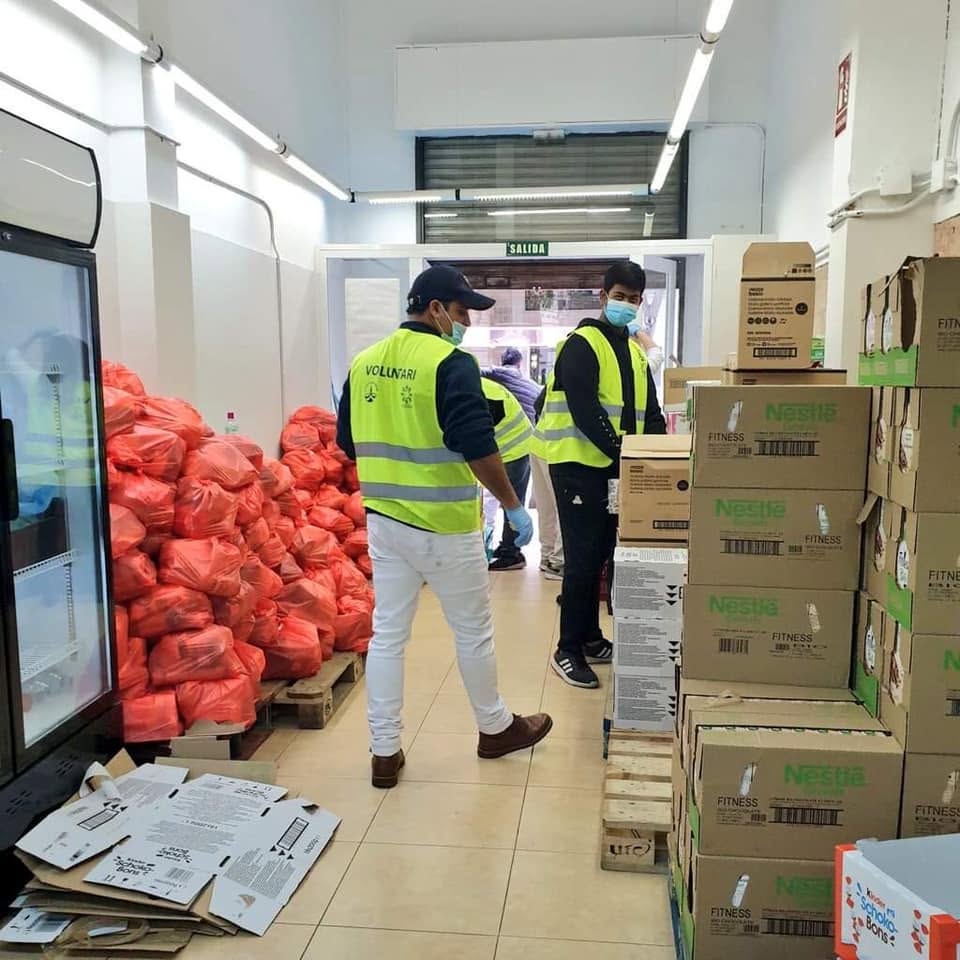
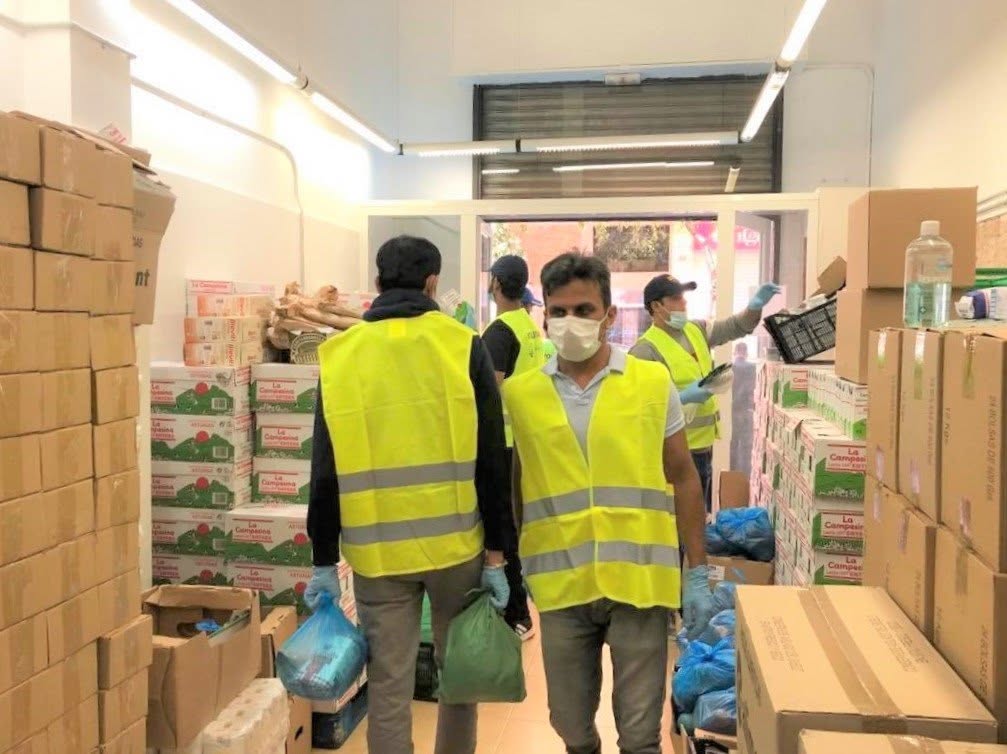
Once received, products were transferred to the organisation’s storage space. The volunteer team carried out the following tasks:
- Unloading food.
- Checking the condition of products.
- Checking expiry dates.
- Sorting by category.
- Organising the warehouse.
- Separating dry and fresh food.
- Approximate stock control.
- Preparing parcels.
- Cleaning and disinfecting the space.
Warehouse organisation was essential to ensure that food was delivered in good condition and to prevent food waste.
5.3. Preparation of food parcels
Food was organised into parcels for beneficiary families. As far as possible, the following were taken into account:
- Number of members of the family unit.
- Presence of children.
- Elderly people.
- Specific dietary needs.
- Availability of products.
- Frequency of delivery.
Parcels could contain rice, pasta, pulses, flour, milk, oil, canned food, cereals, fruit, vegetables and infant products. During the first months of the programme, deliveries were made weekly. Later, deliveries mainly took place on a fortnightly basis. This frequency is also recorded in the project’s documentation.
5.4. Food distribution
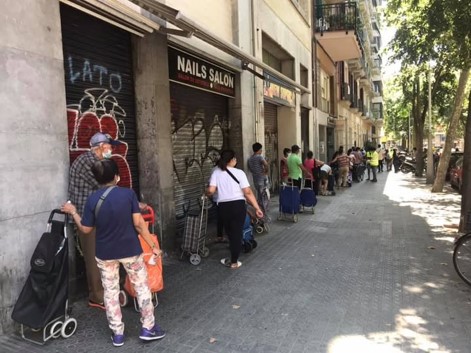
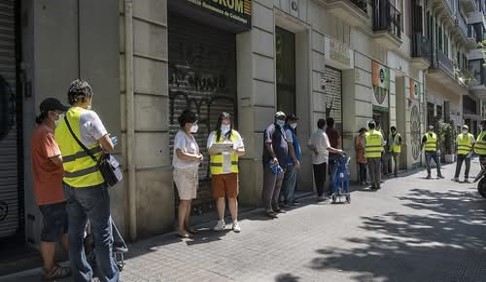
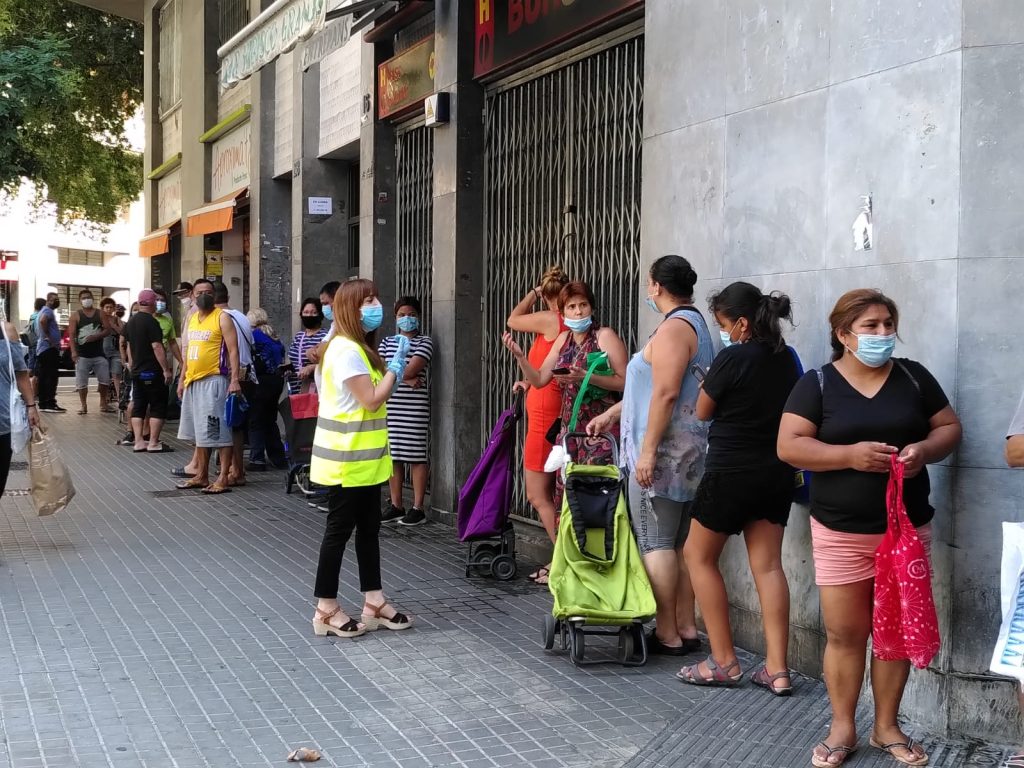
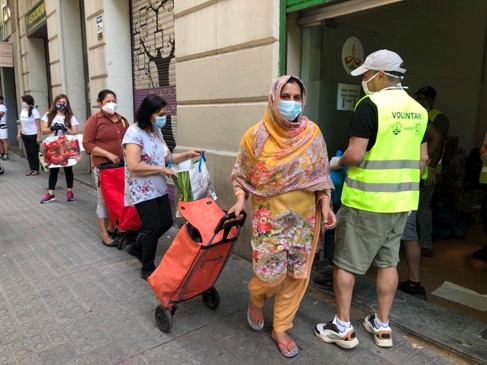
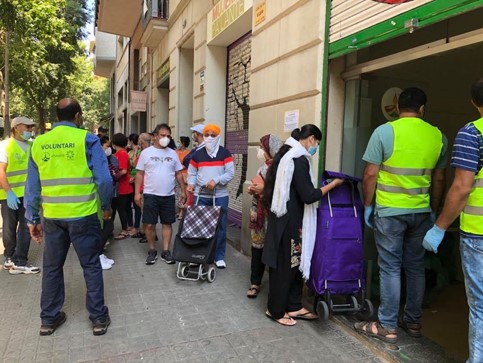
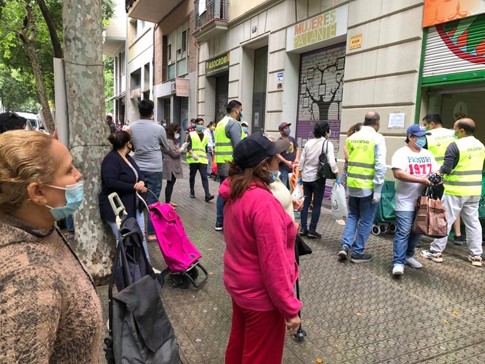
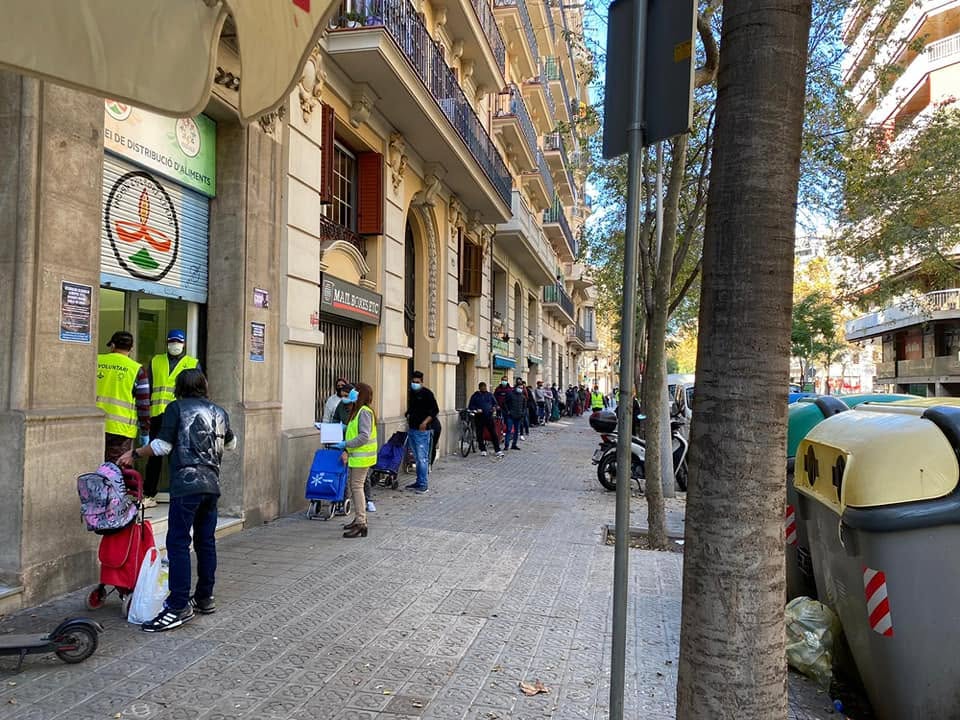
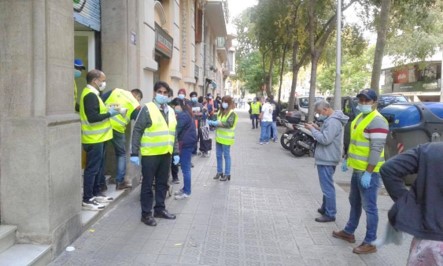
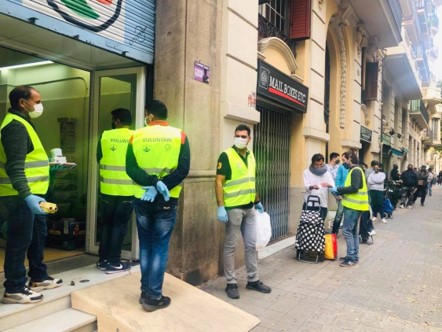
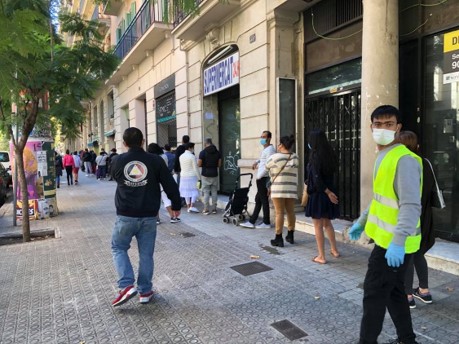
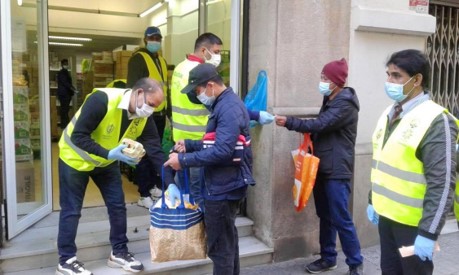
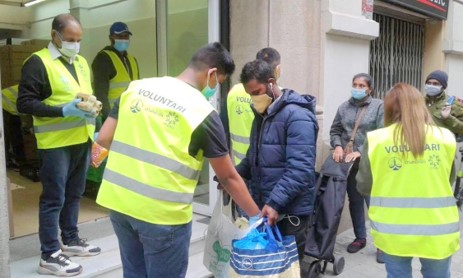
Distribution was organised through schedules and shifts to avoid crowding and ensure compliance with health and safety measures. Beneficiaries were informed in advance of the day and time slot for collection. Volunteers were responsible for:
- Preparing the delivery space.
- Checking lists.
- Organising queues.
- Handing out parcels.
- Dealing with incidents.
- Informing about future deliveries.
- Identifying new needs.
- Referring people to other services when necessary.
The reference documentation notes that distribution took place from the organisation’s premises in Barcelona, with 25 volunteers responsible for collection, warehouse management, parcel preparation and final delivery.
5.5. Distribution of health protection equipment
During periods of highest contagion risk, masks, gloves, hand sanitiser and other personal protective equipment were distributed. This action was particularly aimed at women domestic workers and carers of elderly or dependent people, many of whom continued working during the pandemic without initially having adequate protective measures.
5.6. Information and social guidance
The programme was not limited solely to the delivery of food. Families also received guidance related to:
- Financial aid.
- Social services.
- Requesting appointments.
- Furlough schemes (ERTE) and employment situations.
- Renewal of documentation.
- Municipal resources.
- Health services.
- Available benefits.
- Referrals to other organisations.
Assistance was provided by phone, online and in person, adapted to the restrictions in place at each moment. The Foundation also organised workshops and advisory sessions to facilitate families’ access to public resources and strengthen their independence.
6. Intervention methodology
The programme was carried out through a community-based methodology, close to the people and coordinated with local resources.
Identification and referral
Families accessed the programme through different channels:
- Referral from Social Services.
- Referral from social organisations.
- Referral from community associations.
- Referral from temples and religious centres.
- Direct request from the individual or family.
In each case, a basic assessment of the family, economic and social situation was carried out.
Individualised attention
Although distribution was carried out collectively, the Foundation sought to provide individualised attention to each family. Special attention was paid to household composition, the presence of children, situations of unemployment, illness, isolation or lack of documentation, and the existence of other vulnerability factors.
Networking
The intervention was carried out in collaboration with social services, organisations, foundations, associations and community networks. The project document records coordination with the Social Services centres of Raval Nord, Raval Sud, Sant Antoni, Poble-sec and Gòtic, as well as various foundations, associations and Sikh temples.
Volunteer participation
Volunteers were the essential element in ensuring the continuity of the programme. Volunteers took part in all phases:
- Collection.
- Transport.
- Storage.
- Sorting.
- Parcel preparation.
- Cleaning.
- Access control.
- Distribution.
- Assisting families.
- Translation and intercultural mediation.
The linguistic and cultural diversity of the volunteer team made it possible to assist beneficiaries in different languages and to create a space of trust.
7. Volunteer team
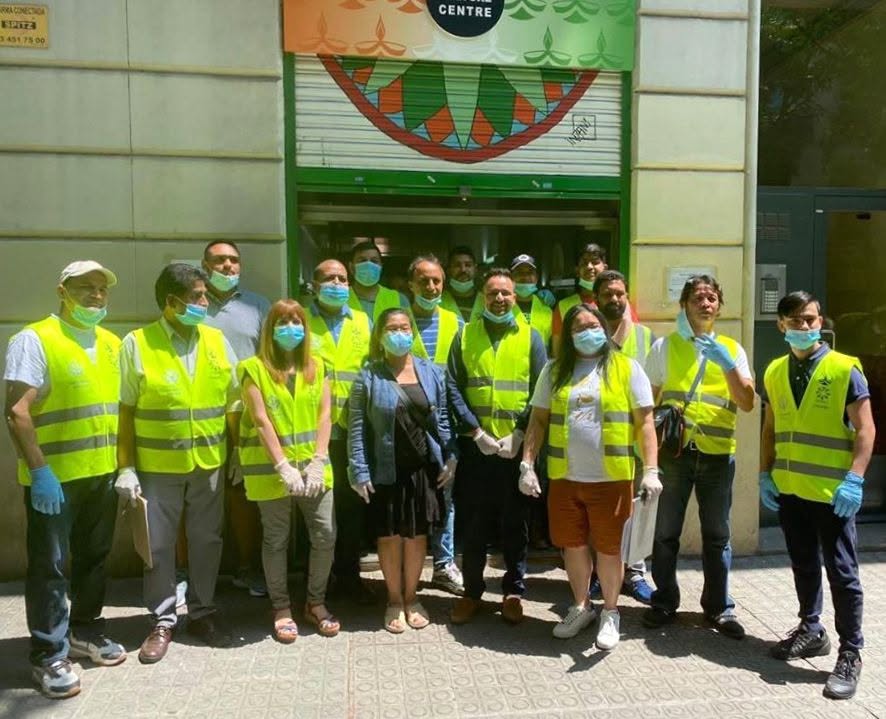
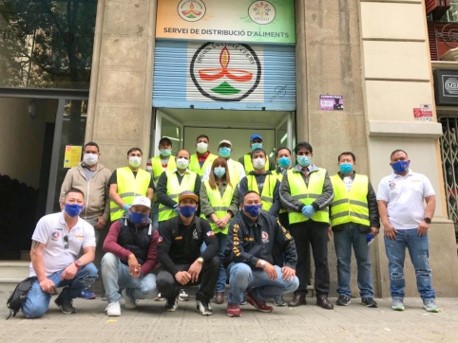
More than 25 volunteers regularly took part in running the programme. The team was made up of people of different ages, nationalities and professional backgrounds, united by a commitment to supporting families affected by the pandemic. The Foundation did not initially have a professional structure sufficient to respond to an emergency of this scale. For this reason, volunteer participation was decisive. The programme’s documentation indicated that the activity was coordinated by the Foundation’s Board of Trustees and carried out with the support of 25 volunteers responsible for collecting donations, organising the warehouse and distributing food. During the most intense periods, volunteers dedicated many hours a week to logistics and support tasks. The work carried out was especially significant because it took place in a context of health risk, mobility restrictions and social uncertainty.
8. Safety measures during COVID-19
The activity was adapted to the health regulations in force at each phase of the pandemic. The measures applied included:
- Use of masks.
- Use of gloves when handling products.
- Availability of hand sanitiser.
- Cleaning and disinfection of surfaces.
- Organisation of shifts.
- Capacity control.
- Maintaining safe distances.
- Staggered deliveries.
- Reduced physical contact.
- Preventive information for families.
- Remote assistance when possible.
Volunteers received instructions on applying these measures and communicating them to beneficiaries.
9. Partner organisations and networks
The success of the Food Solidarity Programme was made possible through the joint work of numerous institutions, social organisations and supportive individuals. Collaborations maintained throughout the programme included:
- Barcelona Food Bank.
- Barcelona City Council Social Services.
- Barcelona Provincial Council.
- Fundación Roure.
- Fundación Áurea.
- Fundación Integra.
- Fundación Ágape.
- ONG De Veí a Veí.
- Indian Culture Centre.
- Indian Association Barcelona.
- Asociación Punjabi Virsa.
- Sikh temples in Barcelona and L’Hospitalet de Llobregat.
- Shops and restaurants.
- Donor companies.
- Families from the Indian community.
- Residents of Barcelona.
- Individual donors.
This collaboration made it possible to increase the quantity and variety of available products, identify families in need and provide more coordinated assistance.
10. Results achieved
The main results obtained were as follows:
- Close to 45,000 beneficiaries: Between March 2020 and December 2022, the programme provided direct food aid to close to 45,000 people.
- More than 25 volunteers: The programme had a stable team of more than 25 volunteers, together with occasional collaborations.
- Continuity for almost three years: Aid was maintained from the start of the pandemic until the end of 2022, adapting to the evolution of the emergency and the needs of families.
- Regular food distribution: Weekly deliveries were made during the initial phases of the emergency, and fortnightly deliveries in later stages.
- Assistance to groups excluded from other forms of aid: The programme made it possible to assist people who, due to their administrative, employment or economic situation, could not access public benefits.
- Reduction of food insecurity: The deliveries helped cover an essential part of the food needs of thousands of households.
- Strengthening of the community network: The project generated a stable network of collaboration among public services, organisations, associations, temples, businesses, volunteers and the general public.
- Prevention of social isolation: Regular contact made it possible to stay in touch with isolated families, identify new needs and provide information about other resources.
11. Social impact
The Food Solidarity Programme had an impact that went beyond the number of parcels distributed. For many families, the programme meant having access to food during weeks or months in which they had no income. The aid also reduced the economic pressure on households, allowing the few resources available to be used to pay for rent, electricity, water, transport or medicine. Regular contact with the Foundation created a space of support and trust. Families could explain their difficulties, receive guidance and be referred to other resources. The programme also strengthened community participation. People from different backgrounds worked together on a collective response based on solidarity, coexistence and mutual support. The initiative helped to make visible the difficulties faced by thousands of migrants and precarious workers left outside the usual systems of social protection.
12. Difficulties encountered
The development of the programme also presented significant difficulties:
- Constant increase in requests for help.
- Limited space to store products.
- Lack of own vehicles to carry out collections.
- The need to maintain deliveries during periods of restrictions.
- Health risk for volunteers.
- Occasional shortages of certain products.
- Difficulty meeting all requests received.
- The need to coordinate schedules, shifts and transport.
- Language and administrative barriers.
- Absence of income for many families over long periods.
These difficulties were addressed by reorganising shifts, relying on volunteer work, coordinating with other organisations and constantly seeking new donations.
13. Final assessment
The Food Solidarity Programme was one of the most significant social responses carried out by the Indian Culture Centre Foundation during the COVID-19 pandemic. The intervention made it possible to assist close to 45,000 people between 2020 and 2022 and to provide a direct response to a basic and urgent need: food. The programme demonstrated the Foundation’s capacity to mobilise volunteers, coordinate with government bodies and social organisations, manage large volumes of food and assist a diverse population. It also highlighted the importance of community organisations as spaces for closeness, trust and early identification of needs. The experience gained strengthened the Foundation’s social structure and consolidated its commitment to the fight against poverty, social inclusion, equal opportunities and the defence of people’s dignity.
14. Acknowledgements
The Indian Culture Centre Foundation expresses its deep gratitude:
- To the more than 25 volunteers who took part in the programme.
- To the partner social organisations and public administrations.
- To the Food Bank.
- To the donor companies, shops and restaurants.
- To the temples and community associations.
- To the families and individuals who made contributions.
- To the beneficiaries, for the trust placed in the Foundation.
Without this collective collaboration, it would not have been possible to sustain a solidarity response of this scale for almost three years. When the city came to a standstill, solidarity carried on. The Food Solidarity Programme represents the Indian Culture Centre Foundation’s commitment to the universal right to food and to a fairer, more inclusive and more supportive society.